
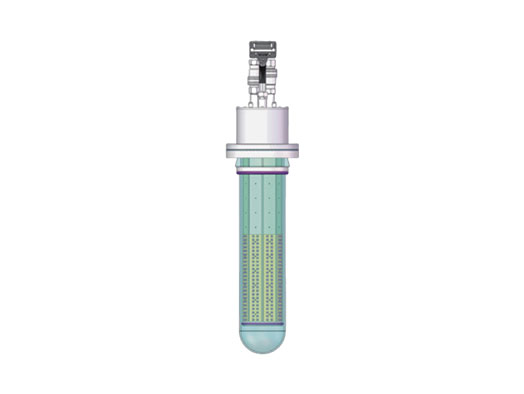
Laboratory reaction equipment for photochemical applications plays a critical role in modern research,
process development, and small-scale synthesis where light is used as a driving force for chemical change.
In simple terms, photochemical reaction equipment is designed to expose reaction mixtures to controlled
wavelengths of light under precise laboratory conditions. This allows scientists to study, optimize,
and scale photoinduced transformations with better reproducibility, safety, and efficiency.
As photochemistry continues to expand across organic synthesis, materials science, environmental chemistry,
and pharmaceutical development, the demand for reliable laboratory reaction equipment for photochemical
applications has increased significantly. Researchers now require systems that can deliver stable light
output, uniform irradiation, controlled temperature, effective stirring, and flexible vessel compatibility.
These requirements make photochemical laboratory equipment essential for both routine experimentation and
advanced method development.
This guide provides a clear, SEO-friendly overview of laboratory reaction equipment for photochemical
applications, including definitions, key advantages, common equipment types, important specifications,
operating considerations, and comparison tables. The content is designed for direct use in blog posts,
industry pages, directory pages, and other HTML-based content sections.
Laboratory reaction equipment for photochemical applications refers to a range of instruments, reactors,
accessories, and support systems used to conduct chemical reactions initiated or accelerated by light.
These systems are engineered to provide controlled illumination, consistent reaction conditions, and safe
operation during experiments that depend on photochemical energy.
In photochemical research, light is not just a source of heat or visibility. It is an active reagent that
can excite molecules, generate radicals, initiate catalytic cycles, or drive structural transformations.
For this reason, the equipment used must deliver light with specific intensity, wavelength, and exposure
characteristics. Laboratory reaction equipment for photochemical applications may include LED light sources,
photoreactors, irradiation chambers, cooling systems, glass reaction vessels, stirring units, and shielding
accessories.
These systems are used for a wide range of applications, including photocatalysis, photooxidation,
photoreduction, UV-driven synthesis, solar simulation studies, and visible-light organic transformations.
Depending on the application, the equipment may be configured for batch reactions, flow reactions, parallel
experimentation, or temperature-sensitive operations.
The success of a photochemical reaction depends heavily on how well light is delivered to the reaction
mixture. Unlike conventional thermal reactions, photochemical processes are highly sensitive to parameters
such as wavelength, light intensity, reactor geometry, vessel transparency, reaction distance, and
temperature control. Poor equipment design can lead to uneven irradiation, low conversion, side reactions,
or inconsistent results.
High-quality laboratory reaction equipment for photochemical applications helps researchers achieve:
In both academic and industrial laboratories, photochemical reaction equipment supports innovation in green
chemistry, sustainable synthesis, and energy-efficient chemical manufacturing. Because light can often
replace harsh reagents or high-temperature conditions, photochemistry is increasingly valued as a cleaner
and more selective approach.
The advantages of using specialized photochemical laboratory equipment extend beyond convenience.
Well-designed systems offer scientific, operational, and economic benefits.
| Advantage | Description | Typical Benefit |
|---|---|---|
| Controlled Irradiation | Delivers a stable and measurable light source with defined wavelength and intensity | Improves reaction consistency and data reliability |
| Improved Safety | Uses shielding, enclosed chambers, and protective housing to reduce exposure risks | Safer handling of UV and high-intensity light |
| Temperature Regulation | Supports cooling or thermal control during extended irradiation | Prevents overheating and unwanted side reactions |
| Flexible Configuration | Compatible with different vessel sizes, reactor types, and workflow formats | Suitable for diverse laboratory applications |
| Higher Reproducibility | Standardizes key reaction parameters for repeatable results | Easier method validation and comparison |
| Energy Efficiency | Often uses LED-based or focused-light systems with lower power demand | Reduced operational cost and heat load |
| Scalability | Supports transition from small-scale screening to larger laboratory workflows | Useful for process development and optimization |
There are several categories of laboratory reaction equipment used in photochemical applications. Each type
is designed for specific reaction conditions, vessel formats, and levels of control.
Photoreactors are dedicated systems designed to provide controlled irradiation for chemical reactions.
They typically include a light source, reaction chamber, vessel holder, cooling mechanism, and safety
enclosure. Photoreactors are widely used in research laboratories because they provide uniform illumination
and consistent operating conditions.
LED light modules are one of the most common light sources in modern photochemical laboratory setups.
They are available in different wavelengths, including UV, visible, and near-visible ranges. LED modules
are valued for their energy efficiency, low heat generation, long service life, and wavelength specificity.
UV irradiation systems are used for reactions requiring ultraviolet light. These systems must be designed
with proper shielding and safety features because UV exposure can be hazardous. UV photochemical equipment
is often used in polymer studies, photoactivation processes, and selective synthesis applications.
Visible-light photochemical equipment is especially popular in modern synthetic chemistry. It supports
photocatalytic transformations that use blue, green, or other visible wavelengths. These systems are often
preferred because they can offer milder operating conditions and reduced substrate decomposition.
Flow photoreactors allow reaction mixtures to move continuously through an irradiated zone. This format
improves light penetration, heat management, and process control. Flow systems are useful for researchers
who want better scalability and more uniform exposure than conventional batch reactors.
Parallel systems are designed to run multiple photochemical reactions at the same time. These are especially
useful in method screening, catalyst optimization, and reaction condition development. Parallel formats
improve productivity and reduce experimental time.
Some photochemical experiments use conventional glass reaction vessels combined with external light sources
and stirring systems. These setups are flexible and may be used in smaller laboratories or customized
workflows. However, they generally require careful control of light distance, alignment, and shielding.
A complete laboratory reaction setup for photochemical applications includes several functional components.
Each component contributes to light delivery, reaction stability, and user safety.
| Component | Function | Importance in Photochemical Reactions |
|---|---|---|
| Light Source | Generates the required irradiation wavelength and intensity | Determines reaction initiation and overall performance |
| Reaction Chamber | Encloses the vessel and controls exposure conditions | Improves uniformity and safety |
| Reaction Vessel | Holds the chemical mixture during irradiation | Affects transparency, volume, and reaction efficiency |
| Stirring System | Keeps the reaction mixture homogeneous | Reduces concentration gradients and improves consistency |
| Cooling Unit | Controls heat generated by light exposure | Prevents thermal degradation and maintains selectivity |
| Safety Shield | Protects operators from direct light exposure | Essential for UV and high-intensity applications |
| Control Interface | Allows adjustment of power, timing, and operating parameters | Supports reproducible and programmable workflows |
When evaluating laboratory reaction equipment for photochemical applications, several technical specifications
should be reviewed carefully. These specifications influence performance, safety, and compatibility.
| Specification | Typical Range or Options | Why It Matters |
|---|---|---|
| Wavelength Range | UV, visible, or near-visible bands depending on the system | Must match the photochemical requirement of the reaction |
| Light Intensity | Adjustable output levels, often measured in mW/cm² or similar units | Influences reaction rate and conversion |
| Irradiation Uniformity | Single-side, multi-side, or chamber-wide exposure | Affects reproducibility and product distribution |
| Temperature Control | Ambient, fan-cooled, liquid-cooled, or thermostated | Prevents excessive heating during irradiation |
| Reaction Volume | Small-scale screening to larger bench-scale capacities | Determines application range and throughput |
| Material Compatibility | Glass, quartz, borosilicate, or specialized transparent materials | Ensures proper light transmission and chemical resistance |
| Safety Features | Enclosures, interlocks, shielding, and protective covers | Critical for user protection |
| Power Consumption | Low to moderate, depending on lamp technology | Influences operating cost and thermal load |
| Control Options | Manual settings, digital control, timer functions, programmable cycles | Supports process consistency and automation |
Laboratory reaction equipment for photochemical applications is used in many scientific and industrial fields.
Its versatility makes it suitable for both discovery work and applied research.
One of the most important decisions in photochemical laboratory design is whether to use batch or flow
reaction equipment. Both formats are widely used, but each offers different advantages depending on the
desired scale, reaction type, and optimization goals.
| Feature | Batch Photochemical Equipment | Flow Photochemical Equipment |
|---|---|---|
| Reaction Mode | Static volume in a vessel | Continuous movement through an irradiated channel |
| Light Penetration | May be limited in larger volumes | Usually more uniform and efficient |
| Temperature Control | Moderate to good, depending on setup | Often excellent due to small channel dimensions |
| Scalability | Useful for screening and small-scale synthesis | Strong for process development and continuous production |
| Ease of Use | Simple and flexible | Requires more system design and calibration |
| Maintenance | Generally straightforward | May require cleaning and flow management |
| Typical Use | Method development, academic research, initial screening | Optimization, scale-up, continuous photochemistry |
Selecting laboratory reaction equipment for photochemical applications depends on the research goal,
reaction chemistry, and operating environment. A well-chosen system should support the required wavelength,
maintain proper temperature, and provide sufficient safety and flexibility.
When evaluating equipment, consider the following factors:
In many laboratories, the best approach is to match the equipment to the chemistry rather than forcing the
chemistry to fit the equipment. Because photochemical reactions can be highly parameter-sensitive, even
small differences in reactor design or lamp positioning may significantly affect results.
The materials used in laboratory reaction equipment for photochemical applications are extremely important.
The reactor housing, vessel material, and optical elements all influence chemical resistance, durability,
and light transmission.
| Material | Common Use | Benefit |
|---|---|---|
| Borosilicate Glass | Standard reaction vessels and laboratory glassware | Chemical resistance and general transparency |
| Quartz | UV-transmitting reactors and specialized optical setups | High light transmission in UV regions |
| Stainless Steel | Structural frames and protective housings | Durability and stability |
| Aluminum | Lightweight enclosures and heat-dissipating components | Low weight and thermal performance |
| Polycarbonate / Shielding Plastics | Protective covers and safety windows | Operator protection and visibility |
| PTFE / Fluoropolymer Parts | Seals, tubing, and chemical-contact components | Excellent chemical resistance |
Safety is a central requirement in any laboratory reaction equipment for photochemical applications.
Light sources used in photochemical research may produce ultraviolet radiation, intense visible light,
or heat that can create operational hazards. Proper design and laboratory procedures are essential.
In addition to operator safety, safe photochemical equipment design also protects the reaction itself by
reducing the risk of overheating, vessel damage, and uncontrolled photodegradation. For laboratories handling
multiple light sources, standardized safety practices are especially important.
Several performance factors determine how well laboratory reaction equipment for photochemical applications
will perform. Understanding these factors helps users improve reproducibility and optimize outcomes.
| Performance Factor | Effect on Reaction | Practical Importance |
|---|---|---|
| Wavelength Matching | Ensures the target molecule or catalyst absorbs the right light energy | Critical for activation efficiency |
| Light Distance | Affects intensity and irradiation uniformity | Influences conversion and reaction time |
| Reaction Depth | Impacts how much light can penetrate the sample | Important in batch setups |
| Mixing Efficiency | Improves exposure of all reactants to light | Reduces mass-transfer limitations |
| Thermal Stability | Controls unwanted heating and side reactions | Supports cleaner reaction profiles |
| Optical Transparency | Allows efficient transmission of the selected light | Affects overall reactor efficiency |
The photochemical laboratory equipment market continues to evolve toward more precise, energy-efficient,
and modular systems. Several trends are shaping the direction of product development and laboratory use.
These developments reflect the broader demand for sustainable laboratory tools that can support faster
experimentation and more reproducible chemical research. As photochemical methods become more common,
laboratories increasingly seek standardized equipment that combines performance with ease of use.
The table below provides a general specification overview for laboratory reaction equipment used in
photochemical applications. Actual values may vary by system type, reactor size, and intended use.
| Specification Category | Typical Options | Application Notes |
|---|---|---|
| Light Source Type | LED, UV lamp, visible lamp, broad-spectrum source | Selected based on absorption profile and reaction target |
| Operating Mode | Batch, flow, or parallel | Determines throughput and workflow style |
| Reactor Material | Glass, quartz, metal housing, optical plastic | Must balance transparency, durability, and compatibility |
| Cooling Method | Air cooling, water cooling, thermostatic control | Important for exothermic or long-duration reactions |
| Power Range | Low to moderate, depending on source type | Impacts intensity, heat, and operating cost |
| Control System | Manual, digital, programmable | Supports repeatability and method standardization |
| Safety Features | Shielding, interlocks, enclosures, warning indicators | Required for user protection |
| Typical Scale | Microscale to bench-scale | Used for research, screening, and development |
For search visibility, the phrase laboratory reaction equipment for photochemical applications
is commonly associated with related keywords such as photochemical reactor,
photochemistry equipment, LED photoreactor, UV reaction system,
visible-light laboratory reactor, photocatalysis equipment, and
flow photoreactor. Including these terms naturally within a page can help improve search
relevance for users looking for photochemical lab solutions, product categories, technical guidance, or
application overviews.
A strong SEO structure for this topic usually includes a clear title, keyword-rich headings, semantic tables,
practical descriptions, and internal-useful terminology. The content should focus on user intent, such as
understanding equipment types, comparing specifications, learning benefits, and selecting the right system
for a particular photochemical application.
Laboratory reaction equipment for photochemical applications is essential for modern research involving
light-driven chemistry. From photoreactors and LED modules to flow systems and UV irradiation setups,
these tools provide the control, safety, and reproducibility needed for successful photochemical
experimentation. By selecting the right equipment and understanding the key specifications, laboratories
can improve reaction performance, support sustainable chemistry, and accelerate innovation.
Whether the goal is organic synthesis, photocatalysis, materials development, or reaction screening,
photochemical laboratory equipment offers a reliable foundation for precise, efficient, and scalable
light-based chemistry. With proper design, material selection, and temperature control, these systems help
researchers achieve better results across a wide range of applications.
```
ДОБАВЛЯТЬ:здание 7, промышленный парк Z Acer Z Hi, проспект Лянь Тан, город Шанху, номер ряда C, Цзянсу
Тел:0512-65560736 / 0512-65371556
Мобильный:+86 13584913897 / +86 13771738377 (Продажи)
Электронная почта:jkzdhsm@yeah.net
Этот веб-сайт использует файлы cookie, чтобы обеспечить вам максимально эффективное использование нашего веб-сайта.
 English
 Español
 Deutsch
 日本語
日本語 한국어
한국어 हिन्दी
 Indonesia
 Melayu
 Tiếng Việt



 WhatsApp
 телефон
Комментарий
(0)